Ascending the Stork Tower
白日依山尽,黄河入海流
欲穷千里目,更上一层楼
The white sun sets behind the mountains; the Yellow River flows into the sea
To see a thousand li further, climb one storey higher
688–742
High Tang poet of “Ascending the Stork Tower” · six poems survive
A working English profile of Wang Zhihuan, compiled from the Chinese poet archive on Songci.China: key dates, the recorded journey stations and selected excerpts.
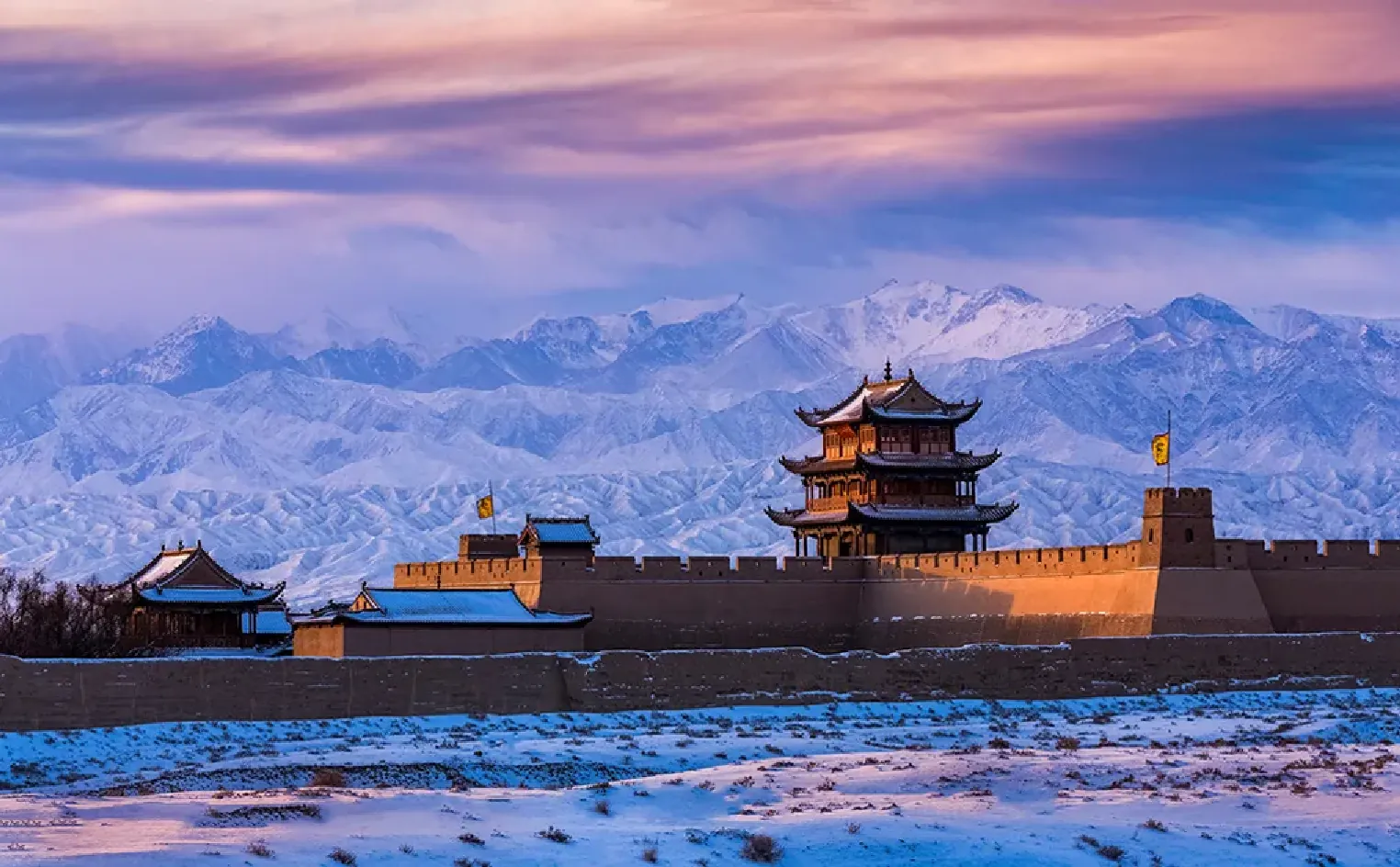
Wang Zhihuan (688–742) was born into the Wang clan of Taiyuan and is recorded in the archive as a High Tang poet of the frontier, famed for “Ascending the Stork Tower” and “Song of Liangzhou”; only six of his poems survive.
The archive records 9 stations for him, from Jinyang in 688 to Wen'an in 742. The list below gives each station in the archive’s own order, with its year and a one-sentence summary of the recorded event. Stations are places the archive links to him, not a continuous itinerary.
Station names are given in the English form used by the archive. The station list, the notes and the poems are reproduced on this page from the archive’s record for 王之涣; each poem below gives the archive’s English rendering first and the Chinese original beneath it.
In 688, Wang Zhihuan was born into the Taiyuan Wang clan; the family later moved to Jiang Commandery in Hedong.
Jinyang (present-day Taiyuan, Shanxi)The white sun sets behind the mountains; the Yellow River flows into the sea To see a thousand li further, climb one storey higher
白日依山尽,黄河入海流。欲穷千里目,更上一层楼。
English rendering as recorded in the archive. The Chinese lines above are the original text, not a translation by this site.(原文,非本站译文)
Around 715, Wang Zhihuan became Registrar of Hengshui County; the magistrate Li Di admired his talent and gave him his daughter in marriage.
Hengshui (present-day Hengshui, Hebei)Willows, trees of the east wind, green along the Imperial Canal Lately they suffer much plucking—there must be many partings
杨柳东风树,青青夹御河。近来攀折苦,应为别离多。
English rendering as recorded in the archive. The Chinese lines above are the original text, not a translation by this site.(原文,非本站译文)
Around 720, slandered out of office, Wang Zhihuan resigned and roamed the Yellow River region, climbing the Stork Tower at Puzhou.
Puzhou (present-day Yongji, Shanxi)The white sun sets behind the mountains; the Yellow River flows into the sea To see a thousand li further, climb one storey higher
白日依山尽,黄河入海流。欲穷千里目,更上一层楼。
English rendering as recorded in the archive. The Chinese lines above are the original text, not a translation by this site.(原文,非本站译文)
Companion piece on the same tower / 关联和作 · 畅当
Towering far above the flying birds, rising high beyond the dusty world The sky's expanse encircles the plain; the river flows into the cleft mountains
迥临飞鸟上,高出世尘间。天势围平野,河流入断山。
Same title and same tower: a later Tang poet's companion poem, recorded in the archive.(同题同楼,唐人继咏)
Around 722, roaming west along the Yellow River, Wang Zhihuan reached the Yumen Pass, where he wrote his "Song of Liangzhou".
Yumen Pass (present-day Dunhuang, Gansu)The Yellow River rises far into the white clouds; a lone city amid ten-thousand-ren mountains Why should the Qiang flute lament the willows? The spring wind never crosses the Yumen Pass
黄河远上白云间,一片孤城万仞山。羌笛何须怨杨柳,春风不度玉门关。
English rendering as recorded in the archive. The Chinese lines above are the original text, not a translation by this site.(原文,非本站译文)
Around 723, Wang Zhihuan roamed to Fuyun Mound north of the Yellow River bend, site of a Turkic shrine, inspiring his second Liangzhou song.
Fuyun Mound (present-day Urad Front Banner, Inner Mongolia)The chanyu gazes north toward Fuyun Mound, how many times has he sacrificed horses at the altar The Han Son of Heaven is now divine in valor—unwilling to make marriage alliances, he sends them home
单于北望拂云堆,杀马登坛祭几回。汉家天子今神武,不肯和亲归去来。
English rendering as recorded in the archive. The Chinese lines above are the original text, not a translation by this site.(原文,非本站译文)
Around 726, Wang Zhihuan roamed to the ancient city of Ye on the Zhang River, writing his "Banquet Song" at a farewell.
Ye City (present-day Linzhang, Hebei)Spring waters green and endless by the long dike, channeling into the Zhang River's single stream Heed not the urgings of the departing oars—on the shallow peach-blossom creek, the boat can barely bear my grief
长堤春水绿悠悠,畎入漳河一道流。莫听声声催去棹,桃溪浅处不胜舟。
English rendering as recorded in the archive. The Chinese lines above are the original text, not a translation by this site.(原文,非本站译文)
Around 730, Wang Zhihuan traveled north to Youzhou, seeing off a friend on the Double Ninth Festival amid the bleak autumn.
Youzhou (present-day Beijing)In bleak Jimen old friends are few; where shall we climb to see you home Today we share the fragrant chrysanthemum wine; tomorrow we fly apart like broken tumbleweed
蓟庭萧瑟故人稀,何处登高且送归。今日暂同芳菊酒,明朝应作断蓬飞。
English rendering as recorded in the archive. The Chinese lines above are the original text, not a translation by this site.(原文,非本站译文)
Around 735, in Chang'an, Wang Zhihuan joined Wang Changling and Gao Shi in the famous "wine-shop wall-marking" contest.
Chang'an (present-day Xi'an, Shaanxi)Opening the case, tears wet my chest, seeing your letter of days past Your grave is lonely now, I fancy it the home of a recluse scholar
开箧泪沾臆,见君前日书。夜台今寂寞,疑是子云居。
English rendering as recorded in the archive. The Chinese lines above are the original text, not a translation by this site.(原文,非本站译文)
In 742, Wang Zhihuan died in office as Sheriff of Wen'an County at fifty-five, mourned by the literary world.
Wen'an (present-day Wen'an, Hebei)白日依山尽,黄河入海流
欲穷千里目,更上一层楼
The white sun sets behind the mountains; the Yellow River flows into the sea
To see a thousand li further, climb one storey higher
黄河远上白云间,一片孤城万仞山
羌笛何须怨杨柳,春风不度玉门关
The Yellow River rises far into the white clouds; a lone city amid ten-thousand-ren mountains
Why should the Qiang flute lament the willows? The spring wind never crosses the Yumen Pass
杨柳东风树,青青夹御河
近来攀折苦,应为别离多
Willows, trees of the east wind, green along the Imperial Canal
Lately they suffer much plucking—there must be many partings
Each excerpt gives the Chinese original with the archive’s own English rendering below it, reproduced as recorded. This profile does not supply a new verse translation of its own.
The station list, years and summaries follow the site’s journey data. A place is listed because the archive connects him to it; the sequence is not presented as an unbroken route.
Poet and place names use the archive’s English forms. Where two poets share an English name, Chinese characters are added to tell them apart.
This page already carries the archive’s English rendering of each station poem, with the Chinese original beside it. The Chinese-language detail page adds Wang Zhihuan’s life in full and further selected works.
Open the Chinese detail pageThe full English index of Tang, Song and Wei–Jin poets in the archive, grouped by dynasty and ordered by year of birth.
The Chinese-language detail page this profile summarises, with the station notes and poems in full.
Tang · High Tang · 9 recorded stations, from Xiangyang (689) to Xiangyang, Final Days (740).
Tang · High Tang · 13 recorded stations, from Puzhou (701) to Wangchuan (761).