Spring Dawn
春眠不觉晓,处处闻啼鸟
夜来风雨声,花落知多少
In spring sleep, dawn arrives unnoticed; everywhere birds are singing
Through the night, wind and rain; who knows how many blossoms have fallen
689–740
landscape and pastoral poet · “Wang–Meng” with Wang Wei
A working English profile of Meng Haoran, compiled from the Chinese poet archive on Songci.China: key dates, the recorded journey stations and selected excerpts.
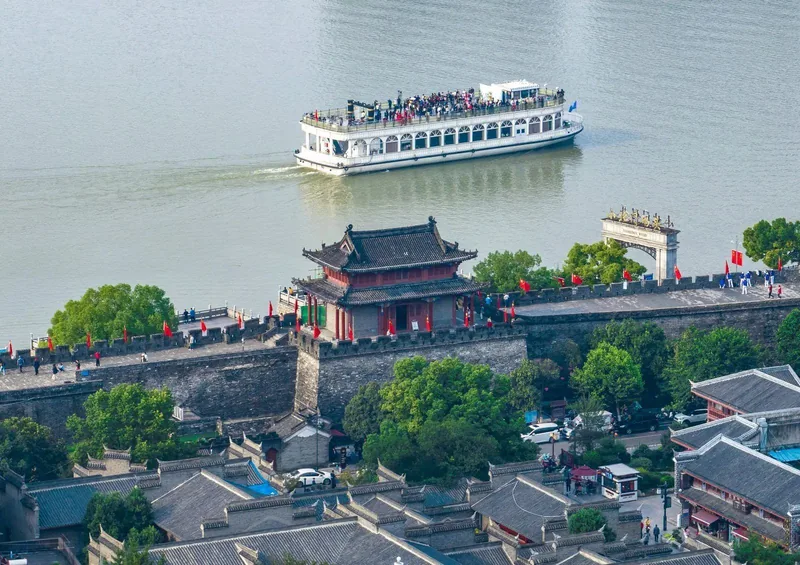
Meng Haoran (689–740) was born at Xiangyang on the Han River and is recorded in the archive as a Tang landscape and pastoral poet, paired with Wang Wei as “Wang–Meng”. He is associated with Lumen Mountain above Xiangyang, where he lived in retreat.
The archive records 9 stations for him, from Xiangyang in 689 to Xiangyang, Final Days in 740. The list below gives each station in the archive’s own order, with its year and a one-sentence summary of the recorded event. Stations are places the archive links to him, not a continuous itinerary.
Station names are given in the English form used by the archive. The station list, the notes and the poems are reproduced on this page from the archive’s record for 孟浩然; each poem below gives the archive’s English rendering first and the Chinese original beneath it.
In 689, Meng Haoran was born into a scholarly family in Xiangyang, a culturally rich city on the Han River.
Xiangyang (present-day Xiangyang, Hubei)In spring sleep, dawn arrives unnoticed; everywhere birds are singing Through the night, wind and rain; who knows how many blossoms have fallen
春眠不觉晓,处处闻啼鸟。夜来风雨声,花落知多少。
English rendering as recorded in the archive. The Chinese lines above are the original text, not a translation by this site.(原文,非本站译文)
Around 705, young Meng Haoran lived in seclusion at Lumen Mountain outside Xiangyang, studying and writing poetry with friends.
Lumen Mountain (present-day Xiangyang, Hubei)Temple bells ring as dusk falls; crowds jostle at the ferry crossing People follow the sandy bank toward riverside villages; I too take a boat back to Lumen
山寺钟鸣昼已昏,渔梁渡头争渡喧。人随沙岸向江村,余亦乘舟归鹿门。
English rendering as recorded in the archive. The Chinese lines above are the original text, not a translation by this site.(原文,非本站译文)
Around 720, Meng Haoran left Xiangyang and traveled to the Dongting Lake region, where the vast scenery inspired him.
Dongting Lake (present-day Yueyang, Hunan)In the eighth month the lake is full, merging with the sky Mist rises over the Yunmeng Marsh; waves shake the city of Yueyang
八月湖水平,涵虚混太清。气蒸云梦泽,波撼岳阳城。
English rendering as recorded in the archive. The Chinese lines above are the original text, not a translation by this site.(原文,非本站译文)
In 727, nearing forty, Meng Haoran traveled north to Luoyang seeking official advancement, where his poetic fame grew.
Luoyang (present-day Luoyang, Henan)Dandies with pearl pellets, cavaliers with golden bridles Drunk as the white sun sets, they gallop into the dusty world
珠弹繁华子,金羁游侠人。酒酣白日暮,走马入红尘。
English rendering as recorded in the archive. The Chinese lines above are the original text, not a translation by this site.(原文,非本站译文)
In 728, Meng Haoran failed the imperial examination in Chang'an. His poem line displeased Emperor Xuanzong, ending his hopes for office.
Chang'an (present-day Xi'an, Shaanxi)Lacking talent, I am abandoned by my enlightened lord; often ill, old friends grow distant White hair hastens old age; the spring sun presses the year to its close
不才明主弃,多病故人疏。白发催年老,青阳逼岁除。
English rendering as recorded in the archive. The Chinese lines above are the original text, not a translation by this site.(原文,非本站译文)
In 730, after failing the examination, Meng Haoran traveled south to the Wu-Yue region, finding solace in the southern landscape.
Jiande River (present-day Jiande, Zhejiang)I moor my boat by a misty islet; at dusk, a traveler's sorrow renews The wilderness vast, the sky lower than the trees; the river clear, the moon closer to man
移舟泊烟渚,日暮客愁新。野旷天低树,江清月近人。
English rendering as recorded in the archive. The Chinese lines above are the original text, not a translation by this site.(原文,非本站译文)
In 731, Meng Haoran continued to Yuezhou in eastern Zhejiang, tracing the footsteps of earlier landscape poets.
Yuezhou (present-day Shaoxing, Zhejiang)The setting sun leaves its clear glow; light oars play along the creek Loving the limpid water creatures, how leisurely this boating is
落景馀清辉,轻桡弄溪渚。澄明爱水物,临泛何容与。
English rendering as recorded in the archive. The Chinese lines above are the original text, not a translation by this site.(原文,非本站译文)
In 733, Meng Haoran returned to Xiangyang. He briefly joined Zhang Jiuling's staff but soon resigned to resume his pastoral life.
Xiangyang, Return (present-day Xiangyang, Hubei)An old friend prepares chicken and millet, inviting me to his farmhouse Green trees enclose the village; blue mountains slant beyond the walls
故人具鸡黍,邀我至田家。绿树村边合,青山郭外斜。
English rendering as recorded in the archive. The Chinese lines above are the original text, not a translation by this site.(原文,非本站译文)
In 740, Meng Haoran died in Xiangyang at fifty-two, after a farewell feast with the banished poet Wang Changling.
Xiangyang, Final Days (present-day Xiangyang, Hubei)Human affairs wax and wane; coming and going form past and present The rivers and mountains retain their famous traces; our generation climbs them again
人事有代谢,往来成古今。江山留胜迹,我辈复登临。
English rendering as recorded in the archive. The Chinese lines above are the original text, not a translation by this site.(原文,非本站译文)
春眠不觉晓,处处闻啼鸟
夜来风雨声,花落知多少
In spring sleep, dawn arrives unnoticed; everywhere birds are singing
Through the night, wind and rain; who knows how many blossoms have fallen
山寺钟鸣昼已昏,渔梁渡头争渡喧
人随沙岸向江村,余亦乘舟归鹿门
Temple bells ring as dusk falls; crowds jostle at the ferry crossing
People follow the sandy bank toward riverside villages; I too take a boat back to Lumen
移舟泊烟渚,日暮客愁新
野旷天低树,江清月近人
I moor my boat by a misty islet; at dusk, a traveler's sorrow renews
The wilderness vast, the sky lower than the trees; the river clear, the moon closer to man
故人具鸡黍,邀我至田家
绿树村边合,青山郭外斜
An old friend prepares chicken and millet, inviting me to his farmhouse
Green trees enclose the village; blue mountains slant beyond the walls
八月湖水平,涵虚混太清
气蒸云梦泽,波撼岳阳城
In the eighth month the lake is full, merging with the sky
Mist rises over the Yunmeng Marsh; waves shake the city of Yueyang
Each excerpt gives the Chinese original with the archive’s own English rendering below it, reproduced as recorded. This profile does not supply a new verse translation of its own.
The station list, years and summaries follow the site’s journey data. A place is listed because the archive connects him to it; the sequence is not presented as an unbroken route.
Poet and place names use the archive’s English forms. Where two poets share an English name, Chinese characters are added to tell them apart.
This page already carries the archive’s English rendering of each station poem, with the Chinese original beside it. The Chinese-language detail page adds Meng Haoran’s life in full and further selected works.
Open the Chinese detail pageThe full English index of Tang, Song and Wei–Jin poets in the archive, grouped by dynasty and ordered by year of birth.
The Chinese-language detail page this profile summarises, with the station notes and poems in full.
Tang · High Tang · 13 recorded stations, from Puzhou (701) to Wangchuan (761).
Tang · High Tang · 9 recorded stations, from Jinyang (688) to Wen'an (742).