Songci.China · English
Poet profile · English edition

Lu You

1125–1210

styled Wuguan · known as Fangweng

A working English profile of Lu You, compiled from the Chinese poet archive on Songci.China: key dates, the recorded journey stations and selected excerpts.

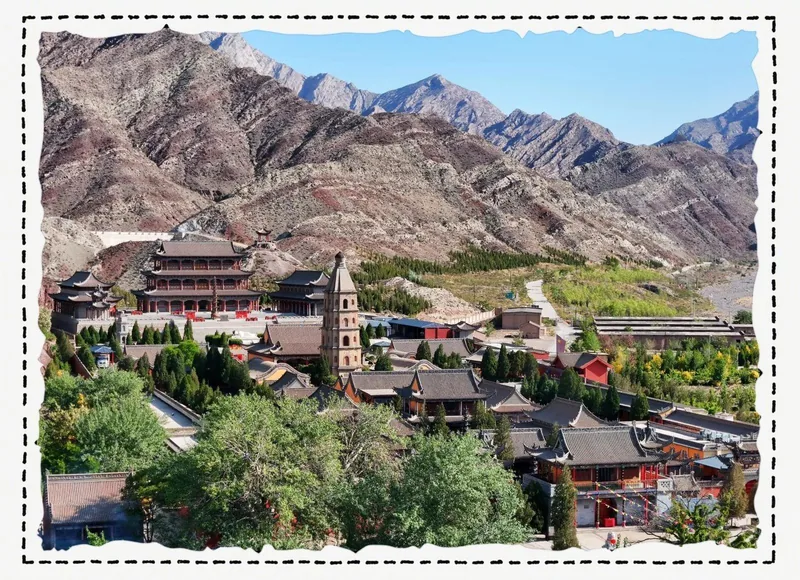
Landscape associated with Lu You — Shaoxing
Shaoxing. The archive links “To My Son” to this station.
Born
1125 · Shaoxing
Died
1210 · Shaoxing
Era
Southern Song
Stations
11 recorded

Introduction

Who he was

Lu You (1125–1210), courtesy name Wuguan and known as Fangweng, was born at Shaoxing, into a family that had fled south after the Jingkang catastrophe. The archive records a Southern Song poet whose work returns repeatedly to the recovery of the north.

The archive records 11 stations for him, from Shaoxing in 1125 to Shaoxing in 1210. The list below gives each station in the archive’s own order, with its year and a one-sentence summary of the recorded event. Stations are places the archive links to him, not a continuous itinerary.

Journey stations

11 stations

Station names are given in the English form used by the archive. The station list, the notes and the poems are reproduced on this page from the archive’s record for 陆游; each poem below gives the archive’s English rendering first and the Chinese original beneath it.

  1. 1125

    In 1125, Lu You was born in Shaoxing into a refugee family fleeing the Jurchen conquest; the loss of the north became his lifelong obsession.

    Shaoxing (present-day Shaoxing, Zhejiang)

    I know that when I die all things will be empty; but I grieve that the Nine Provinces are not yet united When the royal army recovers the Central Plain, do not forget to tell your father at the family sacrifice

    死去元知万事空,但悲不见九州同。王师北定中原日,家祭无忘告乃翁。

    English rendering as recorded in the archive. The Chinese lines above are the original text, not a translation by this site.(原文,非本站译文)

  2. 1153

    In 1153, Lu You topped the exam but was failed the next year because Qin Hui hated his advocacy of northern recovery; he had to wait until the tyrant died.

    Lin'an (present-day Hangzhou, Zhejiang)

    A lone lamp flickers, about to go out; this night will not yield to dawn All my life a heart for ten thousand li; I would bear a halberd before the king's cause

    孤灯耿耿欲灭,此夜不可晨。平生万里心,执戈王事前。

    English rendering as recorded in the archive. The Chinese lines above are the original text, not a translation by this site.(原文,非本站译文)

  3. 1155

    In 1158, running into his divorced wife Tang Wan at Shen Garden, Lu You inscribed the most heartbreaking love lyric in Chinese literature on the garden wall.

    Shaoxing (present-day Shaoxing, Zhejiang)

    Soft red hands, yellow sealed wine; spring fills the city, willows by the palace wall A heart full of sorrow, years of separation—wrong, wrong, wrong

    红酥手,黄縢酒,满城春色宫墙柳。一怀愁绪,几年离索,错错错。

    English rendering as recorded in the archive. The Chinese lines above are the original text, not a translation by this site.(原文,非本站译文)

  4. 1163

    In 1163 Lu You became Vice-Prefect of Zhenjiang. The statesman Zhang Jun, directing all armies of the Huai and Yangtze region from Jiankang, was determined on a northern expedition, and Zhenjiang guarded the river's defenses.

    Zhenjiang (ancient Jingkou, Jiangsu)

    South of the river, for strategic splendor none surpasses ancient Xuzhou; mountains and rivers interlock, vast and dark. Bugles and horns in the wind sound tragic and grand; beacon fires flare and die across the sky—memories of Sun Quan and Liu Bei.

    江左占形胜,最数古徐州。山川相缪,郁乎苍苍。
    鼓角临风悲壮,烽火连空明灭,往事忆孙刘。

    English rendering as recorded in the archive. The Chinese lines above are the original text, not a translation by this site.(原文,非本站译文)

  5. 1170

    In 1170, traveling up the Yangtze to take up his post at Kuizhou, Lu You kept the detailed travel diary "Entering Shu," a masterpiece of Song prose.

    Kuizhou (present-day Fengjie, Chongqing)

    Of the twelve Wu Mountains nine peaks appear; autumn hues fill the sky above the prow. Tales of morning clouds and evening rain prove empty words—all night monkeys wail beneath the bright moon.

    十二巫山见九峰,船头彩翠满秋空。朝云暮雨浑虚语,一夜猿啼明月中。

    English rendering as recorded in the archive. The Chinese lines above are the original text, not a translation by this site.(原文,非本站译文)

  6. 1172

    In 1172, joining the military staff at Nanzheng on the Song-Jin frontier, Lu You rode to Da San Pass and lived the soldier's life he had always dreamed of.

    Nanzheng (present-day Hanzhong, Shaanxi)

    Autumn reaches the frontier town, the horn sounds mournful; beacon fires illuminate the high terrace Singing a tragic song, striking the zhu; from the height I pour a libation—this mood is grand

    秋到边城角声哀,烽火照高台。悲歌击筑,凭高酹酒,此兴悠哉。

    English rendering as recorded in the archive. The Chinese lines above are the original text, not a translation by this site.(原文,非本站译文)

  7. 1172

    In the first month of 1172 Lu You answered the summons of the Sichuan military commissioner Wang Yan to serve on his staff at Nanzheng, throwing himself into the front line against the Jin.

    Dasan Pass (present-day south of Baoji, Shaanxi)

    War barges in night snow at Guazhou ferry; iron horses in autumn wind at Dasan Pass.

    楼船夜雪瓜洲渡,铁马秋风大散关。

    English rendering as recorded in the archive. The Chinese lines above are the original text, not a translation by this site.(原文,非本站译文)

  8. 1173

    In 1173, transferred to Chengdu, Lu You found the leisurely life of a sinecure agonizing against his unrealized military ambitions.

    Chengdu (present-day Chengdu, Sichuan)

    Dust of travel on my robe mingles with wine stains; roaming far, every place stirs the soul. Was I born to be nothing but a poet? In a drizzling rain I ride my donkey through Sword Gate.

    衣上征尘杂酒痕,远游无处不消魂。此身合是诗人未?细雨骑驴入剑门。

    English rendering as recorded in the archive. The Chinese lines above are the original text, not a translation by this site.(原文,非本站译文)

  9. 1174

    From 1173 to 1174 Lu You served as acting Prefect of Shuzhou (present-day Chongzhou), lodging beside Yanhua Pond, and concurrently administered Qinzhou.

    Shuzhou (present-day Chongzhou, Sichuan)

    Beside the broken bridge outside the post station, it blooms lonely, with no one to claim it. Dusk-bound, grieving alone—then wind and rain besides. No wish to fight for spring; let every flower envy as it will. Fallen, ground to mud and dust—only its fragrance remains what it was.

    驿外断桥边,寂寞开无主。已是黄昏独自愁,更著风和雨。
    无意苦争春,一任群芳妒。零落成泥碾作尘,只有香如故。

    English rendering as recorded in the archive. The Chinese lines above are the original text, not a translation by this site.(原文,非本站译文)

  10. 1190

    In 1190, recalled to Lin'an, Lu You was impeached for "mocking the wind and moon" and sent home; he never held office again.

    Lin'an (present-day Hangzhou, Zhejiang)

    The taste of the world has thinned like gauze year by year; who bade me ride to lodge in the capital? All night in a small house I listen to spring rain; at dawn in the deep lane they sell apricot blossoms.

    世味年来薄似纱,谁令骑马客京华。小楼一夜听春雨,深巷明朝卖杏花。

    English rendering as recorded in the archive. The Chinese lines above are the original text, not a translation by this site.(原文,非本站译文)

  11. 1210

    In 1210, dying at eighty-five in Shaoxing, Lu You wrote the "To My Son" poem—China's last and greatest patriotic cry.

    Shaoxing (present-day Shaoxing, Zhejiang)

    I know that when I die all things will be empty; but I grieve that the Nine Provinces are not yet united When the royal army recovers the Central Plain, do not forget to tell your father at the family sacrifice

    死去元知万事空,但悲不见九州同。王师北定中原日,家祭无忘告乃翁。

    English rendering as recorded in the archive. The Chinese lines above are the original text, not a translation by this site.(原文,非本站译文)

Selected works

5 excerpts
01 · Selected poem

To My Son

死去元知万事空,但悲不见九州同
王师北定中原日,家祭无忘告乃翁

I know that when I die all things will be empty; but I grieve that the Nine Provinces are not yet united
When the royal army recovers the Central Plain, do not forget to tell your father at the family sacrifice

Chinese original; English rendering as recorded in the site archive.
02 · Selected poem

Hairpin Phoenix

红酥手,黄縢酒,满城春色宫墙柳
一怀愁绪,几年离索,错错错

Soft red hands, yellow sealed wine; spring fills the city, willows by the palace wall
A heart full of sorrow, years of separation—wrong, wrong, wrong

Chinese original; English rendering as recorded in the site archive.
03 · Selected poem

Indignation (excerpt)

楼船夜雪瓜洲渡,
铁马秋风大散关。

War barges in night snow at Guazhou ferry;
iron horses in autumn wind at Dasan Pass.

Chinese original; English rendering as recorded in the site archive.
04 · Selected poem

Busuanzi: On the Plum Blossom

驿外断桥边,
寂寞开无主。
已是黄昏独自愁,
更著风和雨。
无意苦争春,
一任群芳妒。
零落成泥碾作尘,
只有香如故。

Beside the broken bridge outside the post station,
it blooms lonely, with no one to claim it.
Dusk-bound, grieving alone—
then wind and rain besides.
No wish to fight for spring;
let every flower envy as it will.
Fallen, ground to mud and dust—
only its fragrance remains what it was.

Chinese original; English rendering as recorded in the site archive.
05 · Selected poem

Spring Rain Clears in Lin'an

世味年来薄似纱,谁令骑马客京华
小楼一夜听春雨,深巷明朝卖杏花

The taste of the world has thinned like gauze year by year; who bade me ride to lodge in the capital
All night in a small house I listen to spring rain; at dawn in the deep lane they sell apricot blossoms

Chinese original; English rendering as recorded in the site archive.
How to read this page

Provenance

Poems are quoted, not translated here

Each excerpt gives the Chinese original with the archive’s own English rendering below it, reproduced as recorded. This profile does not supply a new verse translation of its own.

Stations are the archive’s record

The station list, years and summaries follow the site’s journey data. A place is listed because the archive connects him to it; the sequence is not presented as an unbroken route.

Names

Poet and place names use the archive’s English forms. Where two poets share an English name, Chinese characters are added to tell them apart.

This page already carries the archive’s English rendering of each station poem, with the Chinese original beside it. The Chinese-language detail page adds Lu You’s life in full and further selected works.

Open the Chinese detail page

Continue reading

Elsewhere on this site

All 110 poets

The full English index of Tang, Song and Wei–Jin poets in the archive, grouped by dynasty and ordered by year of birth.

Xin Qiji

Song · Southern Song · 14 recorded stations, from Licheng, Jinan (1140) to Qianshan (1207).

Li Qingzhao

Song · Northern-Southern Song Transition · 11 recorded stations, from Jinan (1084) to Lin'an (1155).

闽ICP备2024036120号-5 | 闽公网安备35021102002463号