Songci.China · English
Poet profile · English edition

Liu Yuxi

772–842

styled Mengde · called the “Hero of Poetry”

A working English profile of Liu Yuxi, compiled from the Chinese poet archive on Songci.China: key dates, the recorded journey stations and selected excerpts.

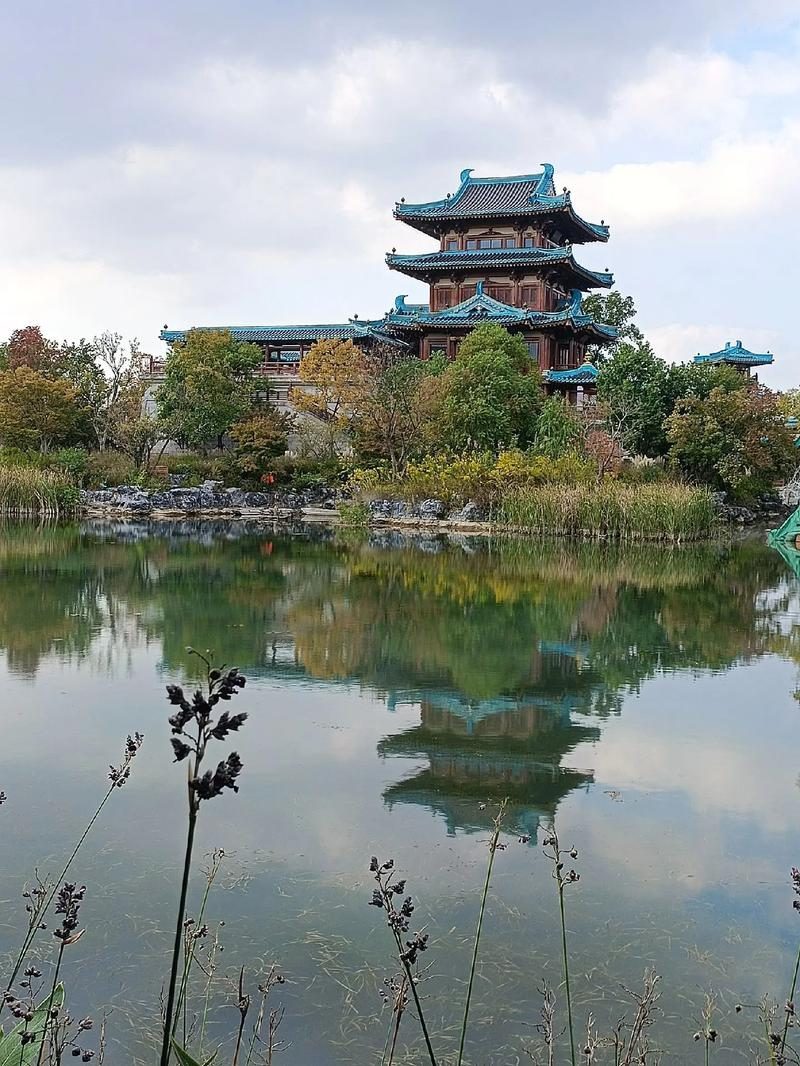
Landscape associated with Liu Yuxi — Jinling
Jinling. The archive links “Black-Robe Lane” to this station.
Born
772 · Luoyang, Hometown
Died
842 · Luoyang, Final Years
Era
Mid Tang
Stations
12 recorded

Introduction

Who he was

Liu Yuxi (772–842), courtesy name Mengde, was born at Luoyang and is recorded in the archive as the poet called the “Hero of Poetry”, exiled for twenty-three years after the Yongzhen Reform, and author of “Inscription of the Humble Cottage” and “Black-Robe Lane”.

The archive records 12 stations for him, from Luoyang, Hometown in 772 to Luoyang, Final Years in 842. The list below gives each station in the archive’s own order, with its year and a one-sentence summary of the recorded event. Stations are places the archive links to him, not a continuous itinerary.
Journey stations

12 stations

Station names are given in the English form used by the archive. The station list, the notes and the poems are reproduced on this page from the archive’s record for 刘禹锡; each poem below gives the archive’s English rendering first and the Chinese original beneath it.

  1. 772

    In 772, Liu Yuxi was born; his family lived in Luoyang. He studied poetry under the monk-poets Jiaoran and Lingche in the south.

    Luoyang, Hometown (present-day Luoyang, Henan)

    In years past our high spirits bound a host of heroes; how often we walked home from court in single file Now north of seas and south of rivers, all are scattered—two old men meet again in Luoyang town

    昔年意气结群英,几度朝回一字行。海北江南零落尽,两人相见洛阳城。

    English rendering as recorded in the archive. The Chinese lines above are the original text, not a translation by this site.(原文,非本站译文)

  2. 793

    In 793, Liu Yuxi passed the jinshi examination at twenty-two alongside Liu Zongyuan, rising swiftly in Chang'an.

    Chang'an, Examination (present-day Xi'an, Shaanxi)

    Garden peonies are lovely but lack character; lotuses on the pond are pure but lack passion Only the tree peony is the true beauty of the nation—when it blooms, it stirs the whole capital

    庭前芍药妖无格,池上芙蕖净少情。唯有牡丹真国色,花开时节动京城。

    English rendering as recorded in the archive. The Chinese lines above are the original text, not a translation by this site.(原文,非本站译文)

  3. 805

    In 805, Liu Yuxi joined the Yongzhen Reform; upon its failure he was exiled as Sima of Langzhou, beginning twenty-three years of banishment.

    Chang'an, Reform (present-day Xi'an, Shaanxi)

    In the deep summer night the hall opens; flying mosquitoes wait in darkness, thunderous as drums Their sudden clamor startles the ear, rumbling as if rolling in from the South Mountain

    沉沉夏夜兰堂开,飞蚊伺暗声如雷。嘈然欻起初骇听,殷殷若自南山来。

    English rendering as recorded in the archive. The Chinese lines above are the original text, not a translation by this site.(原文,非本站译文)

  4. 805

    In winter 805, Liu Yuxi arrived in Langzhou, where he spent ten years absorbing folk songs and writing his defiant poems.

    Langzhou (present-day Changde, Hunan)

    Since ancient times autumn has been met with grief and loneliness; I say autumn days surpass the spring One crane in the clear sky rises through the clouds, drawing my poetic spirit up to the blue empyrean

    自古逢秋悲寂寥,我言秋日胜春朝。晴空一鹤排云上,便引诗情到碧霄。

    English rendering as recorded in the archive. The Chinese lines above are the original text, not a translation by this site.(原文,非本站译文)

  5. 815

    In 815, recalled to Chang'an after ten years, Liu Yuxi wrote a satirical peach-blossom quatrain and was re-exiled within a month.

    Chang'an, Xuandu Temple (present-day Xi'an, Shaanxi)

    Dust from the purple avenues brushes our faces; everyone says they are coming back from viewing blossoms The thousand peach trees in Xuandu Temple were all planted after Master Liu went away

    紫陌红尘拂面来,无人不道看花回。玄都观里桃千树,尽是刘郎去后栽。

    English rendering as recorded in the archive. The Chinese lines above are the original text, not a translation by this site.(原文,非本站译文)

  6. 815

    In summer 815, Liu Yuxi arrived in Lianzhou as prefect, writing folk poems about rice-planting and Yao hunting customs.

    Lianzhou (present-day Lianzhou, Guangdong)

    On the ridge, flowers and grass grow level; swallows fly east and west The paddy ridges look like threads; white waters gleam unevenly

    冈头花草齐,燕子东西飞。田塍望如线,白水光参差。

    English rendering as recorded in the archive. The Chinese lines above are the original text, not a translation by this site.(原文,非本站译文)

  7. 821

    In 821-822, Liu Yuxi served as prefect of Kuizhou, where he composed his celebrated "Bamboo Branch Songs" from local folk airs.

    Kuizhou (present-day Fengjie, Chongqing)

    Willows green, the river calm; I hear my love singing on the stream Sunrise in the east, rain in the west—you say there is no sunshine, yet there is sunshine

    杨柳青青江水平,闻郎江上唱歌声。东边日出西边雨,道是无晴却有晴。

    English rendering as recorded in the archive. The Chinese lines above are the original text, not a translation by this site.(原文,非本站译文)

  8. 824

    In 824, Liu Yuxi became prefect of Hezhou, where he wrote the immortal "Inscription of the Humble Cottage".

    Hezhou (present-day Hexian, Anhui)

    At noon the tree shadows stand straight; alone I chant at the pavilion by the pool Quietly I watch the bees instruct, idly I ponder the crane's dignified bearing

    日午树阴正,独吟池上亭。静看蜂教诲,闲想鹤仪形。

    English rendering as recorded in the archive. The Chinese lines above are the original text, not a translation by this site.(原文,非本站译文)

  9. 826

    In 826, Liu Yuxi wrote his "Five Poems on Jinling", including the immortal "Black-Robe Lane", imagining the fallen Six Dynasties capital.

    Jinling (present-day Nanjing, Jiangsu)

    By Red Sparrow Bridge wild grasses flower; at Black-Robe Lane the evening sun slants low The swallows that once nested in the halls of Wang and Xie now fly into the homes of common folk

    朱雀桥边野草花,乌衣巷口夕阳斜。旧时王谢堂前燕,飞入寻常百姓家。

    English rendering as recorded in the archive. The Chinese lines above are the original text, not a translation by this site.(原文,非本站译文)

  10. 826

    In winter 826, on his way back north, Liu Yuxi met Bai Juyi for the first time at a Yangzhou banquet; their exchanged poems became immortal.

    Yangzhou (present-day Yangzhou, Jiangsu)

    The dreary lands of Ba mountains and Chu waters—twenty-three years I was cast aside By the sunken ship a thousand sails pass; before the withered tree, ten thousand trees in spring

    巴山楚水凄凉地,二十三年弃置身。沉舟侧畔千帆过,病树前头万木春。

    English rendering as recorded in the archive. The Chinese lines above are the original text, not a translation by this site.(原文,非本站译文)

  11. 828

    In 828, back in Chang'an, Liu Yuxi revisited Xuandu Temple and wrote his defiant sequel—'Master Liu of former days has come again'.

    Chang'an, Revisit (present-day Xi'an, Shaanxi)

    Half the hundred-acre courtyard is moss now; the peach trees gone, rape flowers bloom Where has the Taoist who planted the peaches gone? Master Liu of former days has come again

    百亩庭中半是苔,桃花净尽菜花开。种桃道士归何处,前度刘郎今又来。

    English rendering as recorded in the archive. The Chinese lines above are the original text, not a translation by this site.(原文,非本站译文)

  12. 842

    In 842, Liu Yuxi died in Luoyang at seventy-one, having spent his final years in poetry exchanges with Bai Juyi.

    Luoyang, Final Years (present-day Luoyang, Henan)

    Who does not dread old age? Who pities the aged? Say not the mulberry-and-elm hour is late—its rosy clouds can still fill the sky

    人谁不顾老,老去有谁怜。莫道桑榆晚,为霞尚满天。

    English rendering as recorded in the archive. The Chinese lines above are the original text, not a translation by this site.(原文,非本站译文)

Selected works

5 excerpts
01 · Selected poem

Autumn Songs, No. 1

自古逢秋悲寂寥,我言秋日胜春朝
晴空一鹤排云上,便引诗情到碧霄

Since ancient times autumn has been met with grief and loneliness; I say autumn days surpass the spring
One crane in the clear sky rises through the clouds, drawing my poetic spirit up to the blue empyrean

Chinese original; English rendering as recorded in the site archive.
02 · Selected poem

Black-Robe Lane

朱雀桥边野草花,乌衣巷口夕阳斜
旧时王谢堂前燕,飞入寻常百姓家

By Red Sparrow Bridge wild grasses flower; at Black-Robe Lane the evening sun slants low
The swallows that once nested in the halls of Wang and Xie now fly into the homes of common folk

Chinese original; English rendering as recorded in the site archive.
03 · Selected poem

Bamboo Branch Song, No. 1

杨柳青青江水平,闻郎江上唱歌声
东边日出西边雨,道是无晴却有晴

Willows green, the river calm; I hear my love singing on the stream
Sunrise in the east, rain in the west—you say there is no sunshine, yet there is sunshine

Chinese original; English rendering as recorded in the site archive.
04 · Selected poem

In Reply to Letian's Poem at Our First Meeting in Yangzhou

巴山楚水凄凉地,二十三年弃置身
沉舟侧畔千帆过,病树前头万木春

The dreary lands of Ba mountains and Chu waters—twenty-three years I was cast aside
By the sunken ship a thousand sails pass; before the withered tree, ten thousand trees in spring

Chinese original; English rendering as recorded in the site archive.
05 · Selected poem

Revisiting Xuandu Temple

百亩庭中半是苔,桃花净尽菜花开
种桃道士归何处,前度刘郎今又来

Half the hundred-acre courtyard is moss now; the peach trees gone, rape flowers bloom
Where has the Taoist who planted the peaches gone? Master Liu of former days has come again

Chinese original; English rendering as recorded in the site archive.

How to read this page

Provenance

Poems are quoted, not translated here

Each excerpt gives the Chinese original with the archive’s own English rendering below it, reproduced as recorded. This profile does not supply a new verse translation of its own.

Stations are the archive’s record

The station list, years and summaries follow the site’s journey data. A place is listed because the archive connects him to it; the sequence is not presented as an unbroken route.

Names

Poet and place names use the archive’s English forms. Where two poets share an English name, Chinese characters are added to tell them apart.

This page already carries the archive’s English rendering of each station poem, with the Chinese original beside it. The Chinese-language detail page adds Liu Yuxi’s life in full and further selected works.

Open the Chinese detail page

Continue reading

Elsewhere on this site

All 110 poets

The full English index of Tang, Song and Wei–Jin poets in the archive, grouped by dynasty and ordered by year of birth.

Bai Juyi

Tang · Mid Tang · 12 recorded stations, from Xinzheng (772) to Luoyang (846).

Du Mu

Tang · Late Tang · 11 recorded stations, from Wannian, Jingzhao (803) to Chang'an, Final Days (852).

闽ICP备2024036120号-5 | 闽公网安备35021102002463号